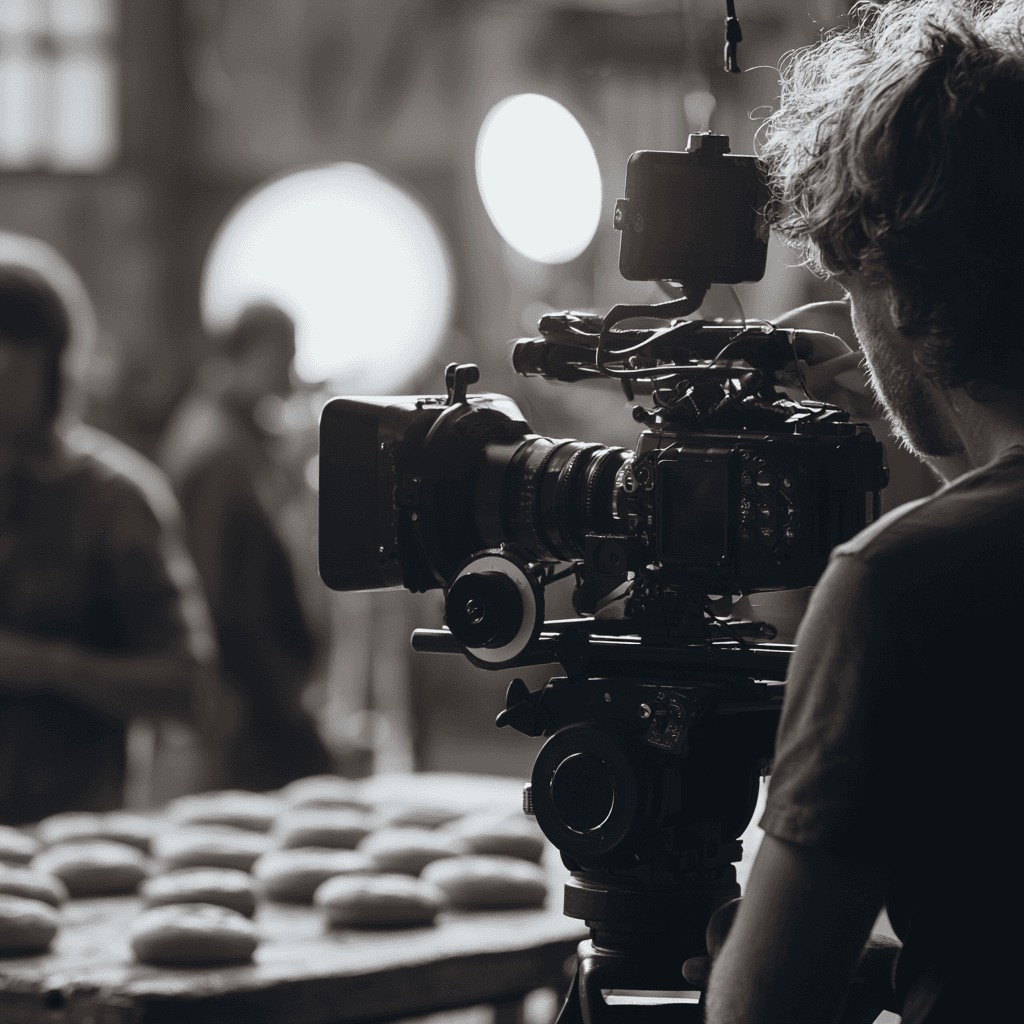
Rome in Three Days — How We Built Antiquity on a Film Set
Historical productions have a trap built into them: the more you try to show, the easier it is to reach the moment when everything starts to look like dress-up. Our task was to shoot a sequence set in ancient Rome in a way that never, not for a second, knocks the viewer out of the illusion.
The Devil Is in the Detail
Armour that gleams too evenly, a helmet cast from plastic, fabrics that are too clean — these are the little things that dismantle the credibility of an entire scene. We spent more time on the props and costumes than on the shoot itself. Every piece of armour was aged, every fabric deliberately worn. The viewer won't name it, but they'll feel it.
A Crowd That's Alive
Crowd scenes are logistics on the edge of chaos. We had dozens of extras in full kit and only a few hours of good light. The key turned out to be giving everyone in the background a specific task — not "stand there and look," but a real action. That way the frame lives even where no one is looking.
Light Instead of Effects
Rather than building ancient splendour in a computer, we leaned on light. A low sun angle, dust hanging in the air, the contrast between the shadow of the columns and a face lit up bright. Light, well handled, stands in for a set no production could afford.
Emotion Over Reconstruction
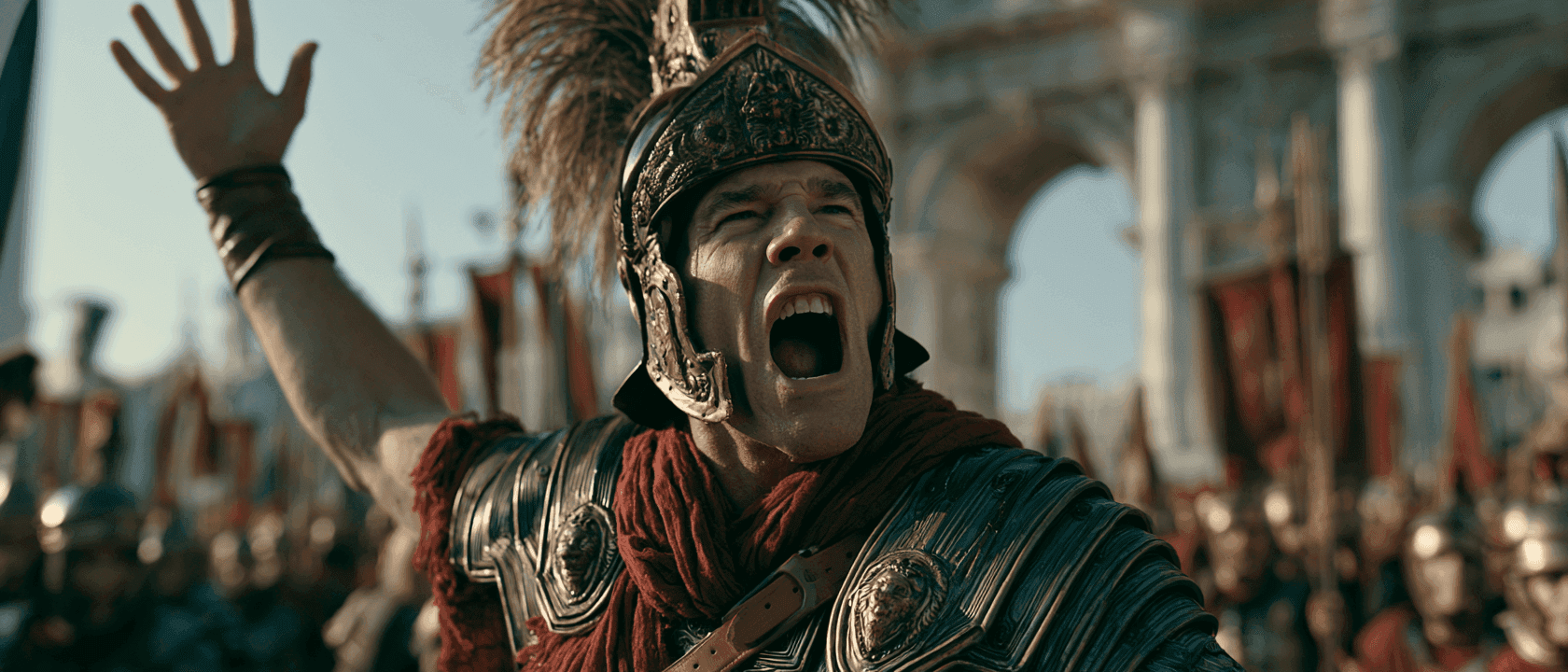
The most important lesson: the viewer won't remember the historical accuracy, they'll remember the face. The strongest shot in the whole sequence is the cry of a single soldier — eyes thrown wide, mouth open, a hand flung into the air. All the rest, all that painstakingly built Rome, exists so that this one emotion has somewhere to land.